Some of the best product ideas don’t come from fancy brainstorming sessions in conference rooms. They don’t come from studying trend reports or market research. They don’t come from looking at what competitors are doing.
Instead, they come from everyday frustrations. Those small moments when something almost works, but not quite. When you think to yourself, “there has to be a better way to do this.”
At V & L Prints, many of our custom designs begin exactly the same way. Someone notices a recurring inconvenience in their daily life or work. They get tired of dealing with the same annoying problem over and over. And they start thinking: why doesn’t a good solution for this exist?
That question—that moment of frustration—is often the starting point for truly functional design.
Everyday Frustrations Are Actually Design Opportunities
Frustration is often misunderstood. Most people see it as something negative to tolerate, ignore, or just work around. We put up with inconveniences and think “that’s just how things are.”
But in reality, frustration is incredibly valuable information. It’s your brain telling you that something isn’t working the way it should.
Frustration highlights several important things:
First, it shows you inefficiencies in your workflow or daily routine. Second, it reveals gaps in existing products on the market. Third, it points out poor fit between the tools available and what users actually need. And fourth, it shows where current solutions are missing the mark.
When people repeatedly have to adapt their behavior or improvise temporary solutions, it’s a clear sign that the current options aren’t meeting their real needs.
Those moments of adaptation and improvisation? That’s exactly where purposeful design begins. (You can learn more about our approach to Purposeful Design in our main article.)

Why Off-the-Shelf Products Fall Short
Mass-produced products that you buy at big stores are built to appeal to the widest possible audience. Companies want to sell to as many people as they can, which makes total sense from a business perspective.
While that approach works great at a large scale, it almost always sacrifices something important: specificity.
When you design for everyone, you end up designing perfectly for no one.
As a result of this “average customer” approach:
Sizes don’t quite fit your specific space or needs Layouts feel awkward because they weren’t designed for how you actually work Features are either unnecessary (adding bulk and complexity you don’t need) or missing (leaving out the one thing that would make it perfect for you) Materials might not be right for your specific use case
Think about the last time you bought an organizer or storage solution from a store. Did it fit perfectly in your space? Did it hold exactly what you needed it to hold? Probably not. You probably had to compromise somewhere.
Custom design exists specifically to solve that problem. When a product is designed around your specific use case, your specific tools, and your specific space, it can address your pain points directly instead of generically.
No more compromises. No more “this is close enough I guess.”
Turning a Frustration Into a Functional Design
The journey from feeling frustrated about a problem to holding a finished custom product in your hands typically follows a clear path. Here’s how it works:
Step 1: Identify the Specific Problem
This is where we ask: What exactly isn’t working? When does it cause frustration? How often does this problem come up? What have you tried already?
The more specific we can be about the problem, the better. “My workspace is messy” is too vague. “My nail files keep falling over and rolling off my work station, and I waste time searching for the right one” is specific and useful.
Step 2: Understand the Environment
Next, we need to understand the context. Where will this product actually be used? How often will you interact with it—every day, multiple times per day, occasionally? Under what conditions will it be used?
For example, if you’re a nail technician, your work environment is fast-paced. You need to grab tools quickly without looking down. The solution needs to keep tools stable and within easy reach. Understanding this context completely changes how we approach the design.
Step 3: Design With Clear Intention
Now we make specific design choices. Every dimension, every material choice, and every feature is selected to solve the specific issue you’re facing.
We don’t add features because they look cool. We don’t make things a certain size because that’s standard. Every choice has a reason tied back to your problem.
Step 4: Test and Refine
This step is crucial. We create the first version, test it in real-world conditions (not just on a computer screen), and then make small adjustments based on actual use.
Maybe the spacing between slots needs to be slightly wider. Maybe the base needs to be a bit heavier for stability. Maybe the angle needs to change by a few degrees. These small refinements make the difference between “pretty good” and “exactly right.”
Step 5: Deliver a Real Solution
The final product should fit naturally into your routine. You shouldn’t have to change how you work to use it. It should feel like it was always meant to be there.
This entire process ensures that the result isn’t just custom for the sake of being custom. It’s genuinely functional and solves your actual problem.
Real-World Example: Why Workflow Matters
Let’s talk about a real example to make this concrete.
In fast-paced work environments, even tiny inefficiencies can slow everything down. Reaching an extra six inches for a tool might only take one second, but if you do it fifty times per day, that’s real time lost. More importantly, it breaks your focus and rhythm.
When we design organizers or tool holders, we don’t just think about storage and keeping things neat. We think about movement, reach, and repetition. We consider how your hands move. We think about what you grab most often and what should be closest.
A design that looks perfectly fine sitting on a desk might feel completely awkward during actual use. It might look organized in a photo but slow you down in real life.
By carefully observing how people actually work—not how we think they should work—we design products that support their natural flow instead of interrupting it.
This is why we always start with the problem and the environment, not with what would look cool or be easy to design. (Learn more about why starting with the problem is so important in our article “Why Every Great 3D Print Starts With a Problem.“)

Why Functional Design Feels “Invisible”
Here’s an interesting thing about really good design: one of the best signs that it’s working is that it disappears into the background.
When a product works really well:
It doesn’t draw attention to itself It doesn’t require you to read instructions or figure it out It doesn’t get in your way or make you think about it You just use it naturally without thinking
Functional design feels effortless to the user because it removes friction instead of adding it. You’re not fighting with the product. You’re not making adjustments. You’re not working around its limitations.
You’re just doing your work or going about your day, and the product quietly supports you.
That feeling of “invisible” design isn’t an accident. It’s completely intentional. It’s the result of carefully thinking through every detail of how something will actually be used.
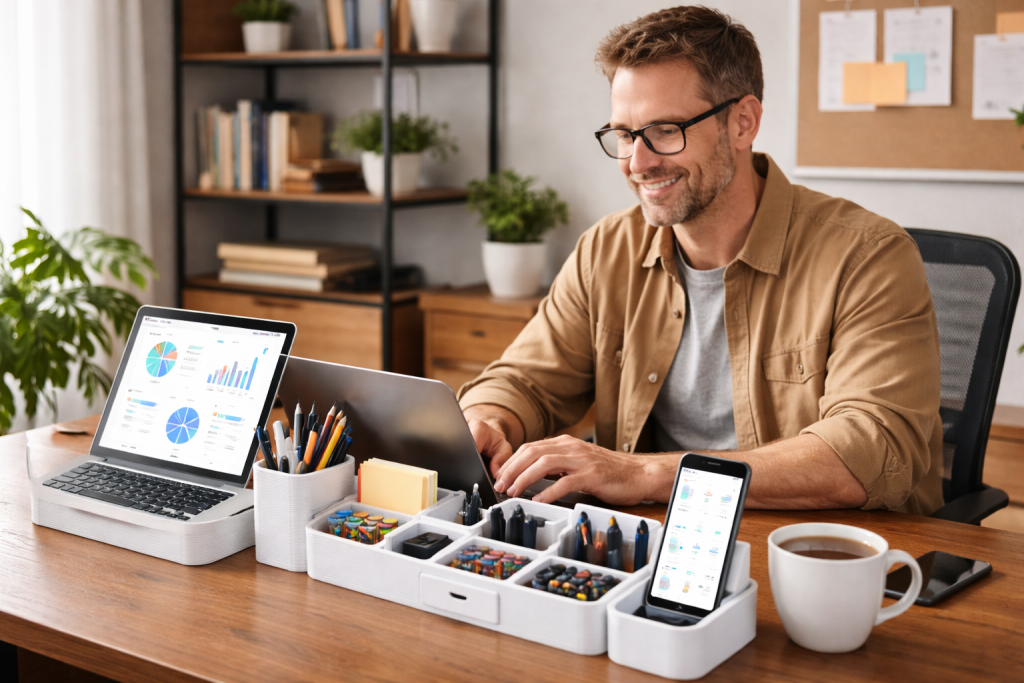
Custom Prints as Long-Term Solutions
Here’s another advantage of custom-designed products: they often last way longer than mass-produced alternatives. And I don’t just mean physically lasting (though that’s true too). I mean they remain useful and relevant for longer.
Because custom products are built for a specific purpose and designed around how you actually work:
They’re less likely to be replaced because they keep doing exactly what you need They adapt better to real use because they were designed for real use from the start They continue providing value over time instead of becoming obsolete
Think about kitchen gadgets you’ve bought that seemed useful but ended up in a drawer after a month. They weren’t designed for your specific needs, so once the novelty wore off, they didn’t fit naturally into your routine.
Custom functional design avoids this problem entirely. When something is built specifically for your workflow and your needs, it becomes indispensable instead of disposable.
This longevity—both physical and practical—is a direct result of purposeful design thinking.
The Hidden Cost of Small Frustrations
Let’s talk about something people don’t think about enough: the real cost of ongoing small frustrations.
Sure, a disorganized workspace or a clunky tool might only waste a few minutes here and there. But those minutes add up fast.
More importantly, small frustrations create mental drain. They add stress. They break your focus. They make work feel harder than it needs to be.
When you replace a source of daily frustration with a functional solution, the benefits go beyond just saving time. You reduce stress. You work more smoothly. You feel more in control of your space and your workflow.
That’s why we take “small” frustrations seriously. They might seem minor, but their impact on your daily experience is real and significant.
How This Reflects Our Purposeful Design Philosophy
Every custom print we create is shaped by real-world needs, not abstract ideas or design trends. We don’t design in isolation at a computer. We design in context, with real information about real problems.
That’s why frustration is never dismissed or brushed aside in our process. It’s not treated as complaining or being picky. It’s treated as the starting point for creating something genuinely better.
When you tell us “this is annoying” or “this doesn’t work well,” we hear “this is an opportunity to design a better solution.”
Your frustration becomes our blueprint. And that blueprint leads to products that actually work in your real life, not just in theory. (To understand the complete philosophy behind everything we do, read our main Purposeful Design article.)
Turning Your Frustration Into Your Solution
If there’s something in your daily life or work that consistently frustrates you, don’t just accept it. That frustration is valuable information pointing you toward a better solution.
The process of turning frustration into functional design starts with a conversation. Tell us what’s not working. Show us the problem. Explain what you’ve tried and why it didn’t quite work.
We’ll handle the rest—the design, the testing, the refinement. And you’ll end up with a solution that makes that daily frustration disappear.
Related Reading
This post is part of our Purposeful Design approach at V & L Prints. To explore more about how we create problem-driven solutions:
- Read our main article: Purposeful Design: Why We Create 3D-Printed Solutions That Actually Work
- Understand our process: Why Every Great 3D Print Starts With a Problem
- See why quality matters: Not All 3D Prints Are Created Equal: Why Design Intent Matters